

In this article:
– The “Shutdown” Myth: Why the holiday pause is actually your biggest relationship-building window of 2026.
– The “Ma Shang” Advantage: How to leverage the Year of the Horse wordplay for instant rapport.
– 3 Strategic Greetings: Specific phrases for partners, close friends, and broad networks.
– The 3-Phase Plan: A practical timeline to build trust before, during, and after the 15-day festival.
The Western holidays are over. We are back at our desks in Europe.
But if you work with China—or want to—your most important business opportunity of 2026 has not started yet.
February 17, 2026, marks the Chinese New Year and the beginning of the Year of the Horse.
For the next fifteen days, business in China essentially pauses. Factories close. Offices empty. The world’s second-largest economy takes a collective breath.
Most Western companies see this as a period of shutdown. They send generic “Happy New Year” messages to their Chinese contacts and wait for business to resume.
Here is what I have noticed from eighteen years of building bridges between German and Chinese business partners: Chinese New Year is not a shutdown. It is a strategic opening. It is the moment when professional acquaintances can turn into genuine allies. The question is not just what you say, but how you show up.
The Language Inside the Language
Last year, I watched a German entrepreneur—let’s call him Michael—send identical “Happy Chinese New Year” messages to all of his Chinese contacts. Professional. Polite. Perfectly translated.
He got responses: “Thank you, Happy Chinese New Year to you too.”
Polite acknowledgments. But the relationships stayed exactly where they were: on the surface.
Meanwhile, his colleague sent fifteen carefully crafted messages, each slightly different based on the recipient’s role. She didn’t just translate words; she translated intention. Guess who got the follow-up meeting after the Chinese New Year?
In Chinese business culture, the effort you put into a greeting reveals the value you place on the relationship. Generic messages signal transactional thinking. Customized greetings signal investment. And this year, the Year of the Horse gives you a linguistic advantage most foreigners miss.
Your 2026 Language Advantage: “Ma Shang”
The Horse in Chinese culture represents speed, energy, and unbridled momentum. But more importantly, it creates a wordplay opportunity that only appears once every twelve years.
The phrase “Ma Shang” (马上) literally translates to “On the Horse.”
But in daily conversation, it means “Immediately.”
This dual meaning lets you craft greetings that work on two levels—acknowledging the zodiac year while expressing genuine wishes for success.
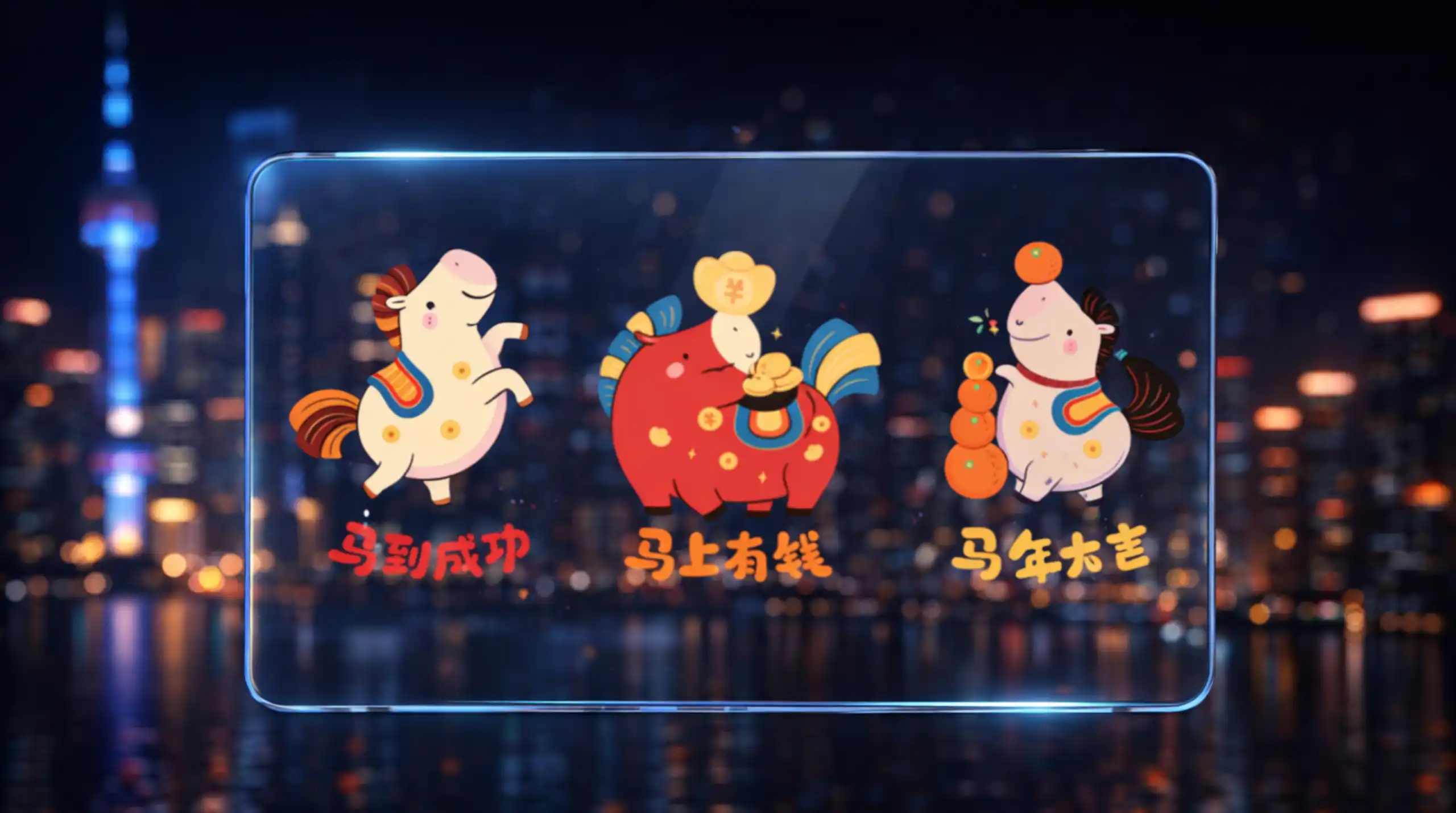
Here are three greetings from my Relationship Architecture framework, calibrated for different relationship contexts:
1: For Strategic Partners: Ma Dao Cheng Gong (马到成功)
Literal translation: “Horse arrives, success is achieved.”
Real meaning: “Instant success upon arrival.”
When to use: This is your gold standard for 2026. Use it for established business relationships, investors, or anyone where you want to signal professional respect combined with momentum.
2: For Close Business Friends: Ma Shang You Qian (马上有钱)
Literal translation: “Money on the horse.”
Real meaning: “Get rich immediately.”
When to use: Only with partners you have a relaxed relationship with, or perhaps younger entrepreneurs.
It is playful. It acknowledges the shared goal of prosperity while showing you understand Chinese humor. Use with caution.
3: For Broader Networks: Ma Nian Da Ji (马年大吉)
Literal translation: “Great luck in the Year of the Horse.”
Real meaning: General prosperity.
When to use: Email subject lines, LinkedIn messages, or when you are unsure of the hierarchy.
It is safe, respectful, and culturally correct.

The Relationship Investment Window
Sending the right greeting is just the start. The real opportunity during the Chinese New Year is the investment.
Chinese New Year isn’t just one day. It is a fifteen-day festival. During this period, Chinese professionals are naturally reflective. They are asking: “Who remembered me during our most important cultural moment?”
Here is a practical 3-phase approach I recommend to my clients:
Phase 1: Before Chinese New Year (Feb 1–16)
Small Gestures, Big Impact
For your most important business relationships, consider a tangible gesture. You do not need to send expensive luxury items.
Instead, focus on thoughtfulness:
- A Shared Memory: A framed photo from a project launch or a dinner you shared when you last visited China.
- A Regional Story: A consumable specialty from your specific region in Germany (like local honey or chocolate) with a note explaining why it is special to you.
- Personal Relevance: If they mentioned an interest in German architecture or a football team during a previous meeting, a small book or item related to that topic shows you were listening.
It is not about the price tag. It is about the signal: I know you as a person, not just a contact.
Phase 2: During Chinese New Year (Feb 17 – Mar 3)
Three Ways to Build Trust
- Craft Your Messages with Cultural Intelligence
Use the greetings we discussed above, but do not just copy-paste them. Integrate them into your personal message.
For example, a strong closing line for a key partner would be: “I wish you 马到成功 (Ma Dao Cheng Gong) in the Year of the Horse!”
This simple addition shows you understand the cultural context and wish them immediate success. - Engage Authentically on Social Media
Check WeChat or LinkedIn. If your contacts share photos of their family reunions or hometown food, engage with them. A warm comment on a personal post during the holidays builds more rapport than a cold email during business hours. - Capture the Details (The “Elephant” Memory)
This is a step most people forget. During this holiday, your contacts might mention travel plans, their children’s achievements, or family traditions. Do not just “like” and forget. Write these details down in your relationship-building notebook.
If you don’t have one, I highly recommend you start one. It is the simplest tool to move from transactional contacts to genuine connections.
Phase 3: After the Chinese New Year
The Meaningful Reconnect
When business resumes, resist the urge to jump immediately into transactions or deadlines.
Start your first call by asking about their holiday. Use the details you noted down. Show interest in how they spent this important time. Then transition to business.
This sequence—Connect, then Transact—is the rhythm of trust in China.
Beyond 2026: The “Third Way” of Networking
I often hear German entrepreneurs say they don’t have time for the “soft stuff” like relationship building. They want to focus on contracts, logistics, and product quality.
But in my experience, relationships are not the soft stuff. They are the infrastructure.
You wouldn’t enter a new market without understanding the logistics infrastructure. We shouldn’t enter China without understanding the relationship infrastructure.
The goal isn’t to stop being German and “acting” Chinese. The goal is what I call The Third Way:
- German Precision ensures the project is viable.
- Chinese Relationship Wisdom ensures the project is sustainable.
When you integrate both, you don’t just get a deal. You get a partnership that can weather storms.
The Year of the Horse represents speed and momentum. Will you use this energy to rush past the details? Or will you use it to accelerate the depth of your connections?
The choice to build that infrastructure starts now.
I wish you 马到成功 (Ma Dao Cheng Gong) — immediate success in the Year of the Horse.
— Zheng
Want to dive deeper into building authentic professional relationships?
I’m developing an online course on mastering networking as an introvert. Join the waitlist for my newsletter to be the first to know when it launches.
Get Weekly Relationship Architecture Insights
Proven frameworks, networking strategies, and cross-cultural intelligence—delivered to your inbox every week.
